


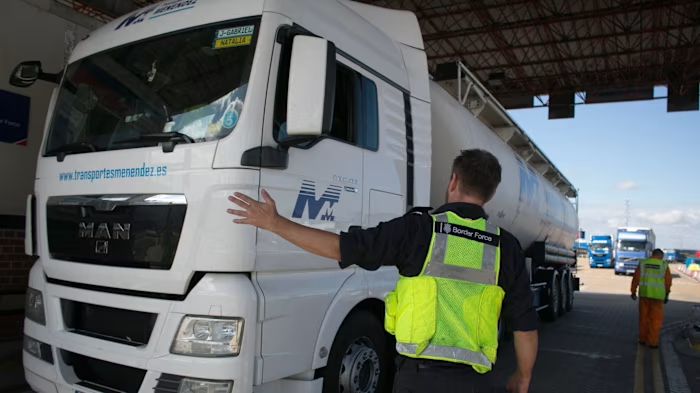

Who is affected? UK importers, exporters, small-to-medium enterprises (SMEs), and UK households facing daily cost-of-living pressure.
What is happening? Non-tariff barriers, customs controls under the Border Target Operating Model (BTOM), and structural labor shifts continue to alter trade dynamics and consumer prices.
When? From the 2021 implementation of the EU–UK Trade and Cooperation Agreement (TCA) through to the full phase-in of physical border controls.
Why it matters: Understanding these systemic economic adjustments is critical for business forecasting, supply chain management, and personal financial planning.
Table of Contents
-
Key Facts & Macroeconomic Summary
-
Latest Developments: Border Controls & BTOM Realities
-
Background Information: From Frictionless Trade to Non-Tariff Barriers
-
Why This Matters: The Productivity and Investment Gap
-
Impact on UK Businesses: Supply Chains, Exports, and Regulatory Costs
-
Impact on UK Consumers: Household Bills, Choice, and Inflation
-
Expert Analysis: Sectoral Split (Goods vs Services)
-
Future Outlook: The TCA Review and Beyond
-
Key Takeaways
-
Frequently Asked Questions
Key Facts & Macroeconomic Summary
-
4% Long-Run Productivity Deficit: The Office for Budget Responsibility (OBR) maintains that leaving the EU Single Market and Customs Union reduces long-term UK total factor productivity by approximately 4% compared to remaining an EU member.
-
Depressed Goods Trade: Data from the Office for National Statistics (ONS) shows that UK goods exports to the EU remain down by approximately 14% to 16% in volume terms relative to pre-referendum projections.
-
Erosion of Export Variety: Academic research from Aston University indicates a 27% decline in the total variety of goods exported to the EU by UK firms, revealing that thousands of smaller businesses have stopped selling to the bloc entirely due to administrative overhead.
-
Resilient Services Export Growth: Conversely, UK services exports (finance, legal, tech, professional services) have grown strongly—up by 29% in nominal value since 2018—mitigating some of the overall national trade balance drag.
-
Added Grocery Costs: Independent research from the London School of Economics (LSE) calculates that post-Brexit sanitary and phytosanitary (SPS) rules and paperwork have added an average of £250 to household food bills since 2021.
Latest Developments: Border Controls & BTOM Realities
The introduction of the final stages of the UK Government’s Border Target Operating Model (BTOM) marks a significant shift in how goods enter Great Britain from the European Union.
┌─────────────────────────────────────────────────────────────────────────────┐
│                   THE THREE PILLARS OF POST-BREXIT BTOM                     │
├──────────────────────────────┬──────────────────────────────────────────────┤
│ 1. Health Certification      │ Mandatory veterinary/phytosanitary certs for │
│                              │ medium-risk agrifood products. │
├──────────────────────────────┼──────────────────────────────────────────────┤
│ 2. Physical BCP Inspections  │ Physical checks and identity audits at port  │
│                              │ Border Control Posts (BCPs).             │
├──────────────────────────────┼──────────────────────────────────────────────┤
│ 3. Common User Charge        │ Flat fees levied per consignment to fund     │
│                              │ border inspection infrastructure.│
└──────────────────────────────┴──────────────────────────────────────────────┘
For years following the formal Brexit transition date, Great Britain delayed implementing full import checks on EU goods to avoid logistics chokepoints and border queues. However, the full enforcement of physical checks at Border Control Posts (BCPs), health certification requirements for medium-risk plant and animal products, and the mandatory Common User Charge have established permanent structural costs for UK importers.
Importers of fresh produce, meats, cheeses, and cut flowers now pay statutory inspection fees regardless of whether their specific container is pulled for physical inspection. Freight forwarders report that these compliance steps add between 24 and 48 hours to transport times for consolidated groupage loads (where multiple small shipments share a single truck), hit small specialist food importers hardest.
Background Information: From Frictionless Trade to Non-Tariff Barriers
Prior to January 1, 2021, UK businesses operated inside the European Single Market and Customs Union. Goods moved between Dover and Calais with zero tariff obligations, zero customs declarations, and zero regulatory divergence checks.
While the EU–UK Trade and Cooperation Agreement (TCA) successfully avoided headline tariffs and quotas on baseline goods, it created a complex matrix of non-tariff barriers (NTBs):
-
Customs Declarations: Every shipment across the English Channel requires Safety and Security declarations, import/export filings, and tariff classification codes.
-
Rules of Origin: To qualify for zero tariffs under the TCA, UK manufacturers must demonstrate that a required percentage of components originate in the UK or EU. Components sourced from Asia or the US can inadvertently trigger standard World Trade Organization (WTO) tariffs when assembled goods enter the EU.
-
Regulatory Divergence: As the UK establishes independent regulations (such as UKCA marking vs EU CE marking, or separate chemical registers like UK REACH), manufacturers face duplicate testing fees and dual compliance regimes.
Why This Matters: The Productivity and Investment Gap
The core economic transmission mechanism through which Brexit affects the UK economy is not a sudden crash, but rather a slow, structural reduction in trade intensity. Economists define trade intensity as total imports plus exports divided by gross domestic product (GDP).
┌─────────────────────────────────────────────────────────────────────────────┐
│                 ECONOMIC TRANSMISSION CYCLE OF TRADE FRICTION               │
│                                                                             │
│  Higher Border Friction  ──► Lower Trade Intensity ──► Reduced Market Scale │
│                                                                   │         │
│  Stagnant Real Wages   ◄── Subdued Productivity   ◄── Lower CAPEX ┘         │
└─────────────────────────────────────────────────────────────────────────────┘
When trade intensity falls, domestic companies face reduced competition, operate within smaller addressable foreign markets, and gain less exposure to foreign technological innovations. Bank of England analysis indicates that persistent uncertainty over long-term trade arrangements contributed to a flatlining of UK business capital expenditure (CAPEX) between 2016 and 2023, leaving British workers with less capital investment per head than their counterparts in North America and Western Europe.
Impact on UK Businesses: Supply Chains, Exports, and Regulatory Costs
1. The Small Business Export Crisis
While large multinational enterprises possess dedicated compliance departments to process customs declarations and manage Rules of Origin paperwork, UK small and medium enterprises (SMEs) face disproportionate costs. Fixed compliance costs—such as paying £50 to £100 per customs declaration or hiring external customs brokers—eat into the thin profit margins of lower-value orders.
“For an SME exporting £200 consignment orders of artisan craft goods or specialty foods to individual customers in France or Germany, paying £70 in administrative processing fees makes the business model mathematically impossible.”
— Aston University Centre for Business Prosperity Report
2. Supply Chain Lead Times and Inventory Buffers
Just-in-time (JIT) manufacturing networks—particularly in aerospace, automotive, and high-tech manufacturing—rely on hour-by-hour component delivery. Post-Brexit border friction has forced UK manufacturers to build larger inventory buffers, tying up working capital in warehouse storage to insulate operations against Dover-Calais transport disruptions.
3. Labor Shortages and Minimum Salary Thresholds
The end of free movement of workers led to labor shortages in agriculture, food processing, logistics, and social care. Subsequent UK immigration rules increased minimum income thresholds for skilled worker visas, restricting the ability of hospitality and service businesses to fill operational gaps with entry-level EU labor.
Impact on UK Consumers: Household Bills, Choice, and Inflation
1. Supermarket Grocery Prices
The UK imports approximately 48% of its total food consumption, with nearly 70% of those food imports coming directly from the EU. The combination of sterling depreciation, added freight charges, veterinary health certification fees, and BCP delays has pushed import costs directly onto retail supermarket shelves.
| Food Category | Primary EU Origin | Post-Brexit Compliance Requirement | Consumer Impact |
| Fresh Dairy & Cheese | France, Ireland, Netherlands | SPS Certification & BCP Inspection | Price premiums on specialty items; shorter retail shelf life. |
| Fresh Meats (Pork/Beef) | Denmark, Ireland, Poland | Veterinary Certificates | Added import compliance costs passed to retail pricing. |
| Soft Fruit & Vegetables | Spain, Italy, Netherlands | Phytosanitary Inspections | Seasonal price volatility and reduced product variety. |
2. Reduced Consumer Product Choice
In addition to higher prices, UK consumers experience a narrower range of available products. European niche manufacturers—such as small-batch wine producers, specialized boutique fashion labels, and gourmet food artisans—have frequently chosen to stop supplying the UK market altogether rather than navigate UK customs requirements.
3. E-Commerce Purchases and Import Duties
UK consumers ordering directly from EU-based online retailers now frequently encounter unexpected delivery delays, import VAT charges, and courier handling fees upon arrival. This friction has curtailed cross-border e-commerce, isolating the UK retail market.
Expert Analysis: Sectoral Split (Goods vs Services)
To understand the post-Brexit UK economy, one must observe a clear dichotomy between physical goods manufacturing and digital/professional services.
                     UK TRADE DIVERGENCE (2018 - 2025/2026)

  Services Exports  ▲ +29%  ───────────────────────────────────► High-growth sector

  Goods Exports     ▼ -12% to -15% ───────────────────────────► High-friction sector
According to ONS trade balance metrics, UK services exports have significantly outperformed physical trade. Financial technology, management consultancy, architecture, legal services, and software engineering have expanded rapidly across non-EU corridors (particularly the United States and Asian growth markets). Because services rely less on physical border crossings, they circumvent SPS checks, physical customs holds, and inventory bottlenecks.
Conversely, physical manufacturing, agrifood, textiles, and chemicals face structural cost penalties that cannot be easily offset without formal regulatory alignment between the UK and the European Single Market.
Future Outlook: The TCA Review and Beyond
The regulatory and economic framework governing UK-EU relations is not static. Under the terms of the original agreement, the EU–UK Trade and Cooperation Agreement (TCA) includes a formal review clause.
┌─────────────────────────────────────────────────────────────────────────────┐
│                       POTENTIAL TCA DIPLOMATIC PRAGMAS                      │
├──────────────────────────────┬──────────────────────────────────────────────┤
│ Veterinary & SPS Agreement   │ Aligning plant/animal standards to remove    │
│                              │ BCP physical checks.          │
├──────────────────────────────┼──────────────────────────────────────────────┤
│ Professional Mutual Recognition│ Mutual recognition of professional        │
│                              │ qualifications (law, architecture, engineering)│
├──────────────────────────────┼──────────────────────────────────────────────┤
│ Youth Mobility Scheme        │ Target work permits for younger workers to   │
│                              │ alleviate hospitality and culture gaps.       │
└──────────────────────────────┴──────────────────────────────────────────────┘
While structural political red lines remain regarding re-joining the EU Single Market, Customs Union, or restoring free movement of people, policymakers on both sides face growing pressure to implement pragmatic, targeted fixes:
-
A Mutual SPS Agreement: Establishing a bilateral veterinary agreement similar to the Swiss or New Zealand models could remove up to 80% of physical border checks on food imports, lowering consumer inflation and reducing BCP overhead.
-
Energy Market Integration: Re-linking electricity trading mechanisms to prevent added energy grid connection costs across Channel interconnectors.
-
Mutual Recognition of Professional Qualifications: Restoring simplified cross-border practicing rights for British architects, lawyers, and engineers operating across EU member states.
Key Takeaways
-
Productivity Penalty: The OBR projects a permanent 4% reduction in UK long-run productivity due to reduced trade intensity and lower business investment.
-
Import Costs Inflate Food Bills: Full BTOM implementation introduces mandatory health checks, physical inspections, and Common User Charges on imported EU agrifood, adding cost pressures to supermarket shelves.
-
Small Exporters Squeezed Out: While total UK export numbers are buoyed by services, the variety of physical products exported to the EU by SMEs has dropped by 27% due to administrative friction.
-
Services Resilience: Digital, professional, and financial service sectors have successfully adjusted, expanding international trade with non-EU markets.
-
Pragmatic Reform Needed: Future economic stabilization will likely rely on targeted bilateral deals on sanitary standards, energy trading, and professional qualification recognition rather than wholesale structural shifts.
Frequently Asked Questions
1. How does Brexit affect everyday grocery prices in the UK?
Brexit increases food prices through non-tariff barriers, including customs paperwork, veterinary health certificates, and physical port checks under the Border Target Operating Model (BTOM). Importers pass these added compliance costs and logistical delay expenses directly to retail consumers.
2. What is the Border Target Operating Model (BTOM)?
The BTOM is the UK Government’s risk-based border system governing imports from the EU. It enforces health certification, physical border checks, and inspection charges on medium- and high-risk animal, plant, and food products entering Great Britain.
3. Has Brexit caused labor shortages in the UK?
The end of free movement of people reduced the supply of EU workers in lower-wage sectors such as agriculture, food processing, logistics, and hospitality. While net migration from non-EU countries has risen, stricter salary thresholds mean structural shortages remain in specific entry-level roles.
4. Why have UK services performed better than goods since Brexit?
Services (such as legal, tech, finance, and management consulting) do not rely on physical border crossings, physical ports, or sanitary checks. They are largely delivered digitally, enabling service exporters to expand rapidly into non-EU markets like the United States.
5. What are Rules of Origin, and why do they hurt UK exporters?
Rules of Origin require exporters to prove that a specific percentage of a product’s components were sourced locally within the UK or EU to qualify for zero-tariff trade. UK firms importing components from non-EU countries like China or the US often trigger full EU tariffs when re-exporting finished goods.
6. What is the OBR’s forecast for the long-term impact of Brexit on the economy?
The Office for Budget Responsibility (OBR) estimates that leaving the EU Single Market and Customs Union will result in a 4% long-term reduction in UK total factor productivity compared to remaining an EU member.
7. How does Brexit affect UK small and medium enterprises (SMEs)?
Small businesses suffer disproportionately because fixed administrative costs—such as customs declaration fees (£50–£100 per shipment) and veterinary certificates—represent a much larger percentage of their total margin on small orders.
8. Will the UK re-join the EU Single Market or Customs Union?
There is no political consensus or plan among major UK political parties to re-join the Single Market or Customs Union. Instead, future policy focuses on targeted, pragmatic adjustments through the EU–UK Trade and Cooperation Agreement (TCA) review process.