



UK households can reduce energy bills by improving heating efficiency, using appliances more carefully, cutting unnecessary hot-water use and checking whether their energy tariff is competitive. With the Ofgem price cap at £1,723 a year for a typical dual-fuel Direct Debit household in Great Britain for October-December 2026, it is worth reviewing household energy use before winter.
The best place to start is with changes that cost little or nothing. Heating controls, shorter hot-water use, efficient laundry routines and careful monitoring can all help. Bigger improvements, such as insulation or replacing an inefficient heating system, may offer longer-term benefits but need more planning and investment.
This guide explains 15 practical energy saving tips for UK homes, which changes to prioritise, how smart technology can help and where to look for financial support.
Key Facts
-
Current price-cap period: 1 October to 31 December 2026.
-
Typical annual bill benchmark: £1,723 for a dual-fuel household paying by Direct Debit in Great Britain.
-
Electricity unit rate: An average 26.32p per kWh under the relevant capped tariff rates.
-
Gas unit rate: An average 7.97p per kWh.
-
Important distinction: The price cap limits unit rates and standing charges for relevant tariffs; it does not cap every household’s total bill.
-
Potential support: Eligible households may receive the £150 Warm Home Discount, subject to the applicable scheme rules.
- Regional difference: Northern Ireland has a separate energy market and regulatory arrangements.
Table of Contents
-
Adjust your heating controls
-
Check your boiler settings
-
Reduce unnecessary hot-water use
-
Wash clothes at lower temperatures
-
Use your tumble dryer less
-
Reduce appliance standby consumption
-
Switch to LED lighting
-
Draught-proof suitable gaps
-
Check your insulation
-
Use smart meters to track consumption
-
Consider smart heating controls
-
Compare energy tariffs
-
Check your energy bills and meter readings
-
Look for grants and bill support
-
Make a household energy-saving plan
1. Adjust Your Heating Controls
Heating is an important area to investigate when trying to reduce household energy costs, particularly during colder months.
Use your thermostat, timer or programmer to match heating to your routine. Avoid heating rooms unnecessarily, but maintain a safe and comfortable temperature for people who need additional warmth.
Practical steps include:
-
Set heating schedules around the times you are normally at home.
-
Avoid heating an empty home for longer than necessary.
-
Use thermostatic radiator valves to control individual rooms where available.
-
Keep furniture and thick curtains from obstructing radiators.
-
Check whether the thermostat is positioned somewhere representative of the room temperature.
Do not assume that leaving the heating on all day at a low setting is always cheaper than using timed heating. The best arrangement depends on the property, heating system, insulation and household needs.
2. Check Your Boiler Settings
If your home uses a gas boiler, review its controls before winter.
A modern condensing boiler may operate more efficiently when its central-heating flow temperature is set appropriately. However, the correct setting depends on the boiler, radiators and property. Consult the manufacturer’s guidance or a qualified heating professional if you are unsure.
You should also:
-
Use the programmer to avoid unnecessary heating.
-
Arrange servicing in line with the manufacturer’s instructions.
-
Investigate radiators that heat unevenly or remain cold.
-
Avoid replacing a functioning boiler solely because a new model is advertised as more efficient without assessing the costs and likely benefits.
A smart thermostat can improve control, but its value depends on whether it helps you reduce unnecessary heating.
3. Reduce Unnecessary Hot-Water Use
Water heated by gas or electricity adds to household energy consumption.
Consider these changes:
-
Take shorter showers where practical.
-
Avoid running hot taps unnecessarily.
-
Wash dishes in a filled bowl or basin rather than under a continuously running hot tap.
-
Use hot-water timers if your system supports them.
-
Check the insulation on an accessible hot-water cylinder and exposed hot-water pipes.
Do not turn down stored hot-water temperatures without understanding the safety requirements for your system. Follow the manufacturer’s guidance and appropriate advice on preventing harmful bacterial growth.
4. Wash Clothes at Lower Temperatures
Many everyday laundry loads do not require a high-temperature wash.
Try washing suitable clothes at 30°C, using the machine’s eco programme and waiting until you have a reasonably full load. Follow care labels and use hotter cycles when hygiene requirements or the garment instructions call for them.
Energy Saving Trust includes using washing machines efficiently among its recommended household savings measures. The amount saved will depend on the machine, cycle, frequency of washing and electricity tariff.
5. Use Your Tumble Dryer Less
Tumble drying can be energy-intensive, depending on the type of appliance and how often it is used.
When conditions allow, dry clothes outside. Indoors, use a suitable drying rack in a ventilated area, taking care to manage condensation. Avoid drying laundry in a way that creates damp or mould.
If you use a tumble dryer:
-
Clean its filter as directed.
-
Avoid drying small loads unnecessarily.
-
Use the appropriate sensor or eco setting if available.
-
Check the manufacturer’s instructions for efficient operation.
Energy Saving Trust identifies reduced tumble-dryer use as one of its recommended actions for cutting household energy consumption.
6. Reduce Unnecessary Appliance Standby Consumption
Some appliances continue to consume electricity when left in standby mode. The amount varies, so it is better to identify the devices that matter rather than assume every plug has the same impact.
You can:
-
Switch off suitable devices when they are not needed.
-
Use a switched extension lead for compatible equipment.
-
Check manufacturer instructions before disconnecting devices.
-
Avoid interrupting equipment that needs to remain powered for safety, updates or essential functions.
A smart plug with energy monitoring may help you identify the consumption of compatible devices. Compare its cost with the potential benefit before buying one.
7. Switch to LED Lighting
If you still use inefficient light bulbs, switching suitable fittings to LED lighting can reduce the electricity required for lighting.
Start with lights that are used frequently. Check bulb compatibility, brightness, colour temperature and dimmer requirements before purchasing replacements.
Switching off lights in unoccupied rooms is also sensible. However, focus first on changes that are relevant to your home rather than expecting lighting alone to transform your entire bill.
8. Draught-Proof Suitable Gaps
Unwanted draughts around doors, windows and other openings can make a home uncomfortable and increase the need for heating.
Depending on the building, possible measures include:
-
Draught excluders for suitable external doors.
-
Seals around opening windows.
-
Insulation around accessible loft hatches.
-
Appropriate treatment of gaps around floorboards.
Do not block ventilation openings, air bricks or extractor fans that are needed for safe ventilation and combustion. Homes with fuel-burning appliances need particular care. Seek qualified advice if you are unsure which openings can safely be sealed.
9. Check Your Home’s Insulation
Insulation can help a property retain heat in winter and reduce unwanted heat gain in warmer weather.
Potential improvements include loft insulation, cavity-wall insulation or other measures suitable for the building. The right choice depends on the property, its existing insulation, moisture conditions and construction.
Before spending money:
-
Check your home’s Energy Performance Certificate (EPC), if available.
-
Use the relevant government home-energy advice service.
-
Compare the estimated installation cost with the projected savings.
-
Check whether you qualify for support before paying for work.
The government provides a home-energy improvement service for properties in England and Wales, with separate guidance for Scotland and Northern Ireland.
10. Use a Smart Meter to Understand Your Consumption
A smart meter can help you see how much energy you are using and identify patterns in your household consumption.
For example, you might discover that electricity use increases when certain appliances operate, or that your heating schedule does not match your actual routine.
To make the information useful:
-
Review consumption at different times of day.
-
Compare usage across similar days or weeks.
-
Check how your supplier’s app displays costs.
-
Investigate unexpected increases.
-
Make one change at a time and observe the result.
A smart meter measures and communicates consumption; it does not automatically reduce energy use. The savings come from the decisions you make using the information.
11. Consider Smart Heating Controls
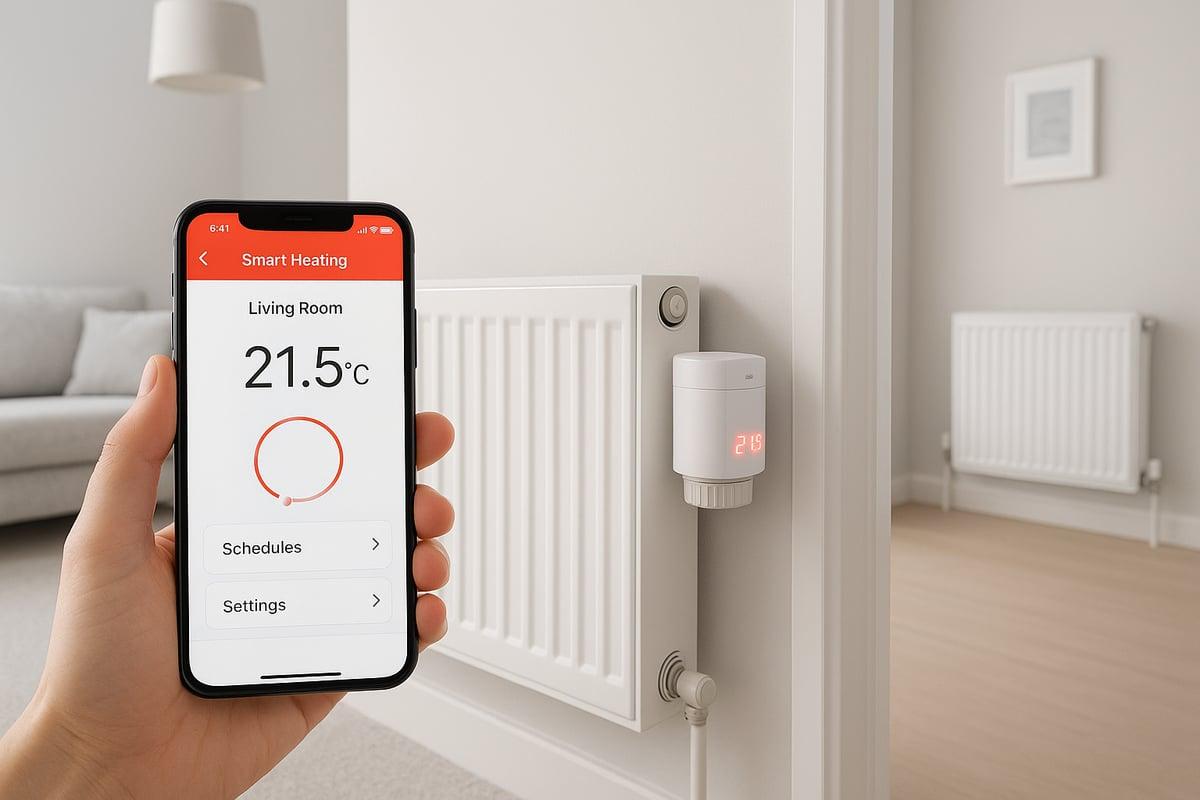
Smart thermostats and compatible heating controls can let you manage heating schedules through an app, adjust temperatures remotely and, depending on the system, automate parts of your routine.
They may be useful if your household schedule changes frequently or if you regularly heat an empty property.
Before purchasing one, check:
-
Whether it works with your existing boiler or heating system.
-
Whether installation is included in the quoted price.
-
Which features require a subscription.
-
Whether it supports the controls you actually need.
-
How much heating you could realistically avoid.
Smart heating technology is most useful when it changes inefficient behaviour. It is not a guarantee of savings, and running heating more often because it is easier to control could increase costs.
12. Compare Energy Tariffs
Reducing consumption is only one way to manage costs. It is also worth checking the tariff you pay.
Review your current unit rates, daily standing charges, contract terms and any exit fees. Compare suitable tariffs using the same expected annual consumption rather than relying solely on a supplier’s headline monthly payment.
Remember that the Ofgem price cap applies to relevant default tariffs in Great Britain. It is not a universal maximum annual bill, and customers on fixed tariffs are not affected by a price-cap change in the same way.
A lower monthly Direct Debit does not necessarily mean that the energy itself is cheaper; the payment can be based on estimated annual use and account balance.
13. Check Your Bills and Meter Readings
Reviewing bills can help you distinguish higher consumption from changes in prices, estimates or payment arrangements.
Check:
-
Whether meter readings are actual or estimated.
-
Whether the unit rates match your tariff.
-
Whether the standing charges are correct.
-
Whether your household usage has changed.
-
Whether your account has accumulated a credit or debt balance.
If something looks wrong, contact your supplier and ask for an explanation. Ofgem says suppliers may also be able to offer payment plans, hardship funds or other support when customers struggle to pay.
14. Look for Grants and Energy-Bill Support
Households should check available support before assuming that energy-efficiency improvements must be paid for entirely out of pocket.
Examples of support to investigate
| Scheme or service | What to know |
|---|---|
| Warm Home Discount | Eligible households in Great Britain may receive a £150 bill discount under the applicable scheme rules. |
| Warm Homes: Local Grant | Available in England for qualifying households and properties, subject to eligibility and local funding. |
| Energy Company Obligation | Check current availability and eligibility through official guidance and participating suppliers. |
| Supplier hardship support | Ask your energy supplier about help with bills, debt or energy-efficiency measures. |
| Local council support | Check current assistance available in your area. |
For the 2026–27 Warm Home Discount scheme, eligible households in England and Wales may receive a letter between late October 2026 and early January 2027. Some recipients may need to provide additional information.
The rules are not identical throughout the UK:
-
England: Check GOV.UK and your local council for current eligibility.
-
Scotland: Check the Scottish arrangements for the Warm Home Discount and advice through Home Energy Scotland.
-
Wales: Check GOV.UK and the relevant Welsh home-energy support services.
- Northern Ireland: Check the Affordable Warmth Scheme and official Northern Ireland energy advice. The Great Britain price cap and Warm Home Discount arrangements do not apply in the same way.
Never assume that an old grant is still accepting applications. Scheme names, deadlines, funding and qualifying conditions can change.
15. Make a Household Energy-Saving Plan
A simple plan makes it easier to focus on actions that are practical for your circumstances.
| Time frame | What to do |
|---|---|
| Today | Check your tariff, meter readings and heating schedule. |
| This week | Review laundry, hot-water use and unnecessary appliance consumption. |
| Before winter | Check draughts, boiler operation and available insulation improvements. |
| This month | Investigate eligible grants, compare tariffs and review smart-control options. |
| Each month | Compare actual consumption and bills, accounting for weather and changes in occupancy. |
Do not judge success solely by whether a winter bill is lower than a summer bill. Heating demand changes with the weather. Where possible, compare consumption in kWh across similar periods and account for tariff changes.
How Much Could You Actually Save?
There is no single reliable saving figure for every household. A home with good insulation and efficient heating may have less room for improvement than a draughty property with older equipment. A household that already follows energy-saving practices may also achieve smaller additional savings.
Energy Saving Trust publishes estimated savings for individual actions, including shorter showers, reduced tumble-dryer use and avoiding standby consumption. These figures provide useful starting points, but they should not be added together automatically because assumptions, household behaviour and usage patterns can overlap.
For a more accurate estimate:
-
Find your annual electricity and gas consumption in kWh.
-
Check your actual unit rates and standing charges.
-
Identify the appliance or behaviour you want to change.
-
Estimate the energy reduction that is realistic for your household.
-
Compare the potential saving with any purchase or installation cost.
For electricity, a simple estimate is:
Estimated cost = electricity used (kWh) × your unit rate.
For example, an appliance using 1 kWh at 26.32p per kWh costs approximately 26p in energy charges. This excludes any additional costs and assumes that rate applies to the usage.
The most useful strategy is to prioritise low-cost actions first, then consider larger improvements based on evidence about your own home.
The Bottom Line
The most effective energy saving tips are those that fit your home and daily routine. Start with heating controls, hot-water use, appliances, draughts and your tariff. Then investigate insulation, smart technology and available support if they are relevant to your circumstances.
For households in Great Britain, the October–December 2026 price cap provides a useful current benchmark, but the bill you actually pay depends on consumption, tariff and location. Northern Ireland households should use the appropriate local pricing and support guidance.
A measured approach—checking usage, making targeted changes and reviewing the results—is more useful than buying products or relying on promises of guaranteed savings.
Frequently Asked Questions
1. What is the quickest way to reduce energy bills in the UK?
Start by reviewing your heating schedule, reducing unnecessary hot-water use, washing suitable laundry at lower temperatures and avoiding unnecessary tumble-drying. Check your tariff and meter readings, too. These steps are usually more accessible than major home improvements, although the savings depend on your household.
2. What uses the most energy in a UK home?
Heating and hot water are major contributors to energy demand in many homes, particularly during winter. However, the largest costs in an individual property depend on its heating system, insulation, appliance use, household size and energy rates.
3. Is it cheaper to leave the heating on low all day?
Not necessarily. The most economical approach depends on your property, heating system, insulation and household routine. Timed heating can avoid heating an empty home unnecessarily, while some systems may need different settings. Follow your heating manufacturer’s guidance and prioritise safe, comfortable temperatures.
4. Do smart thermostats reduce energy bills?
They can help if scheduling, remote control and automation reduce unnecessary heating. However, savings are not guaranteed. Compatibility, installation costs, household behaviour and existing controls all affect whether a smart thermostat is worthwhile.
5. How can renters reduce energy bills without renovating?
Renters can review heating schedules, use appliances efficiently, reduce unnecessary hot-water use, check tariff options and use suitable removable draught excluders. Ask the landlord before making permanent changes to heating equipment, windows or insulation.
6. What energy grants are available in the UK in 2026?
Options include the Warm Home Discount, the Warm Homes: Local Grant in England and other schemes delivered through government, councils and energy suppliers. Availability and eligibility vary by nation, property and household circumstances. Check official guidance before applying.
7. Does the Ofgem price cap limit my total energy bill?
No. In Great Britain, the price cap limits relevant unit rates and standing charges for default tariffs. The total bill depends on how much gas and electricity you use, your location, payment method and applicable tariff.
8. How can I find out which appliances cost the most to run?
Check an appliance’s power consumption and the time it operates, then use your electricity unit rate to estimate its cost. A compatible energy monitor or smart plug may help measure some devices. Actual consumption varies by appliance, settings and usage.
9. Can I get help with energy bills if I am struggling to pay?
Yes, depending on your circumstances. Contact your energy supplier to ask about payment plans, hardship funds and support schemes. GOV.UK and Citizens Advice can help you identify relevant assistance.
10. Do energy-saving tips differ in Northern Ireland?
Yes. Northern Ireland has separate energy-market regulation and support arrangements, so Great Britain price-cap figures and schemes should not automatically be applied. Check the Utility Regulator, Consumer Council and official Northern Ireland guidance.