



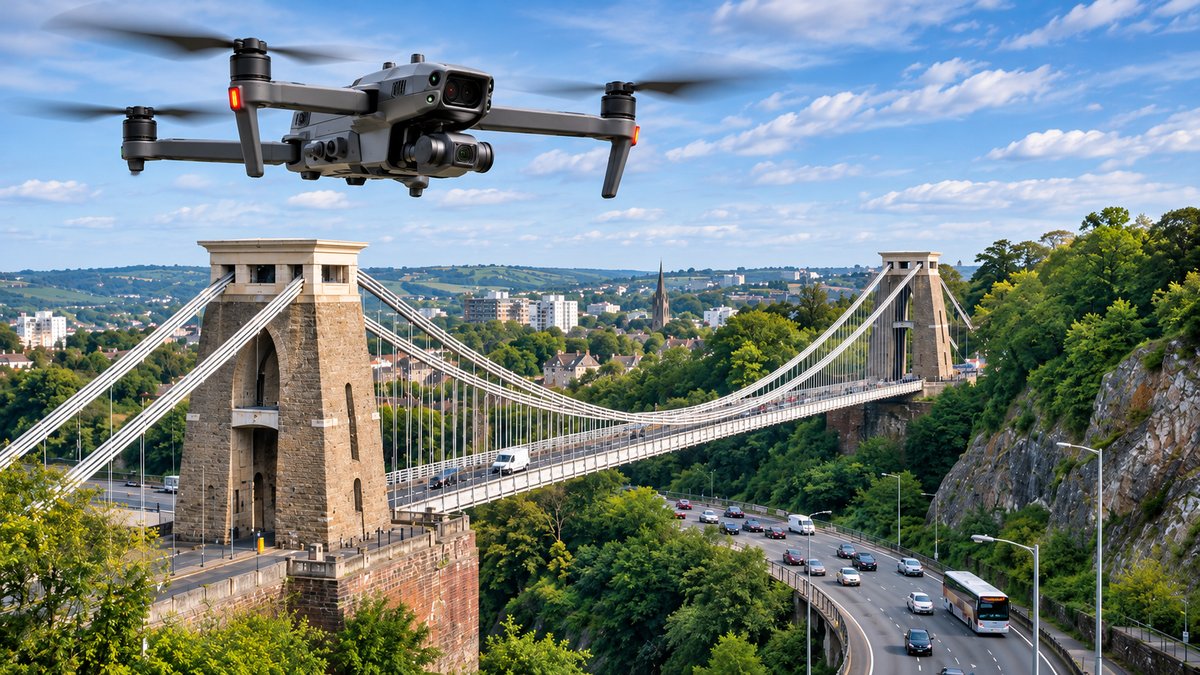
he UK Government has announced a new technology trial worth nearly £2 million to improve police detection of unauthorised drones, strengthen public safety and support the responsible development of Britain’s commercial drone industry.
Announced on 24 November 2026 by the Department for Transport, the London-based initiative will test improved digital identification technology, allowing police to monitor drone activity more effectively.
The programme comes as unmanned aircraft become increasingly important across healthcare, logistics, transport infrastructure and commercial services.
Key Facts About the UK Drone Technology Trial
| Detail | Information |
|---|---|
| Announcement date | 24 November 2026 |
| Total investment | Nearly £2 million |
| Department for Transport funding | £1.2 million |
| Regulatory Innovation Office funding | £500,000 |
| Initial trial location | London |
| Main objective | Improve drone identification and public safety |
| Potential economic contribution | Up to £103 billion over 25 years |
How Digital Drone Number Plates Will Improve Public Safety
The initiative will test technology capable of detecting electronic identification signals transmitted by drones.
These digital identifiers serve a similar purpose to vehicle registration plates, helping authorities establish information about unmanned aircraft operating in a particular area.
According to the Department for Transport’s official announcement, the new equipment is intended to improve the range and reliability of existing detection systems.
For police and aviation authorities, more reliable identification could help distinguish legitimate commercial activity from potentially unlawful or dangerous operations.
The initiative also highlights the importance of developing regulatory frameworks alongside emerging technologies. Similar considerations are explored in our coverage of UK AI regulation and business responsibilities.
Strengthening Security at Major Public Events
Large public gatherings present complex security challenges for police, event organisers and local authorities.
Football matches, music festivals and concerts attract thousands of visitors, making effective coordination between security teams particularly important.
Unauthorised drone flights can introduce additional risks and potentially interfere with event operations.
Improved identification technology could help authorities assess incidents more efficiently and make informed decisions about appropriate responses.
For event organisers, reliable security arrangements are an important part of protecting attendees, maintaining public confidence and reducing the likelihood of unnecessary disruption.
However, the effectiveness of the technology will need to be assessed through operational testing before conclusions can be drawn about its wider deployment.
What the Trial Could Mean for UK Transport Infrastructure
Drones have become valuable tools for infrastructure inspection, particularly in locations that may be difficult or expensive to access using conventional methods.
Potential applications include examining bridge structures, monitoring railway assets, surveying construction projects and assessing infrastructure following severe weather.
Across Devon and Cornwall, major transport connections such as the Tamar Bridge play an essential role in supporting daily journeys, regional businesses and access to public services.
Our guide to Tamar Bridge toll charges and crossing arrangements provides further information about this important regional transport link.
The wider adoption of drone technology could provide infrastructure operators with additional inspection capabilities while reducing dependence on certain traditional surveying methods.
Nevertheless, the government announcement does not confirm any specific deployment of the new identification technology at the Tamar Bridge or elsewhere in Devon and Cornwall.
Supporting Healthcare and Commercial Drone Services
The government’s investment also reflects the growing potential of unmanned aircraft to support essential public services.
Healthcare organisations are exploring drone deliveries as a means of transporting medical supplies, laboratory samples and other time-sensitive materials between facilities.
In suitable circumstances, aerial deliveries could reduce dependence on road transport and provide alternative options when conventional delivery networks experience delays.
Commercial applications extend beyond healthcare. Businesses are also investigating opportunities in agriculture, environmental monitoring, construction, logistics and telecommunications.
The development of reliable operating standards will be important for ensuring that commercial drone services can expand without compromising public safety or interfering with existing aviation operations.
These developments form part of a wider transformation in how British companies use emerging technologies, as discussed in our analysis of UK technology adoption and business innovation.
Drone Industry Could Contribute £103 Billion to the UK Economy
Government estimates suggest that Britain’s drone industry has the potential to generate an economic contribution of up to £103 billion over the next 25 years.
This figure represents a long-term projection rather than guaranteed economic growth.
Realising that potential will depend on factors including regulatory development, technological reliability, commercial demand, investment and public acceptance.
Expansion of the sector could also create employment opportunities in engineering, software development, aviation management, data analysis and infrastructure maintenance.
Businesses considering investment in emerging technologies may benefit from understanding the broader trends shaping Britain’s fastest-growing business sectors.
Balancing Technological Innovation With Public Privacy
As digital monitoring technologies become more advanced, questions concerning privacy, accountability and responsible data management are likely to become increasingly important.
Drone identification systems must operate within appropriate legal frameworks while supporting legitimate aviation and security objectives.
Clear guidance can help businesses and recreational drone operators understand their responsibilities, while effective oversight can strengthen public confidence in emerging technologies.
Drone operators should consult the Civil Aviation Authority’s drone guidance for information about applicable UK operating requirements.
What Happens Next?
The London trial will provide an opportunity to evaluate how improved drone identification systems perform in practical operating environments.
Its findings could inform future decisions about wider deployment, investment and coordination between police forces, aviation regulators and commercial operators.
The announcement represents a step towards developing an environment in which legitimate drone services can expand alongside effective public safety measures.
For Britain’s transport networks, businesses and public institutions, the long-term challenge will be to ensure that technological innovation delivers practical benefits while maintaining security, privacy and public trust.