




This MyProject.ai report explores the 2026 UK natural stone market, including trends, demand, imports, key stone types, and future growth prospects.
The UK natural stone market size has grown steadily in recent years. Grand View Research estimates that the global natural stone market will reach $11.2 billion (£8.24 billion) in 2026, up from $10.6 billion (£7.8 billion) in 2025. The market is projected to grow up to USD 16.9 billion (£12.43 billion) by 2033, at a CAGR of 6.1%. The UK natural stone market is stepping into 2026 with a measured positive outlook, supported by rising imports, renovation activity, premium interior design, landscaping and UK natural stone demand for durable architectural materials. The UK market is heavily supported by imports from India, Italy, China, and Spain.
UK Natural Stone Market at a Glance
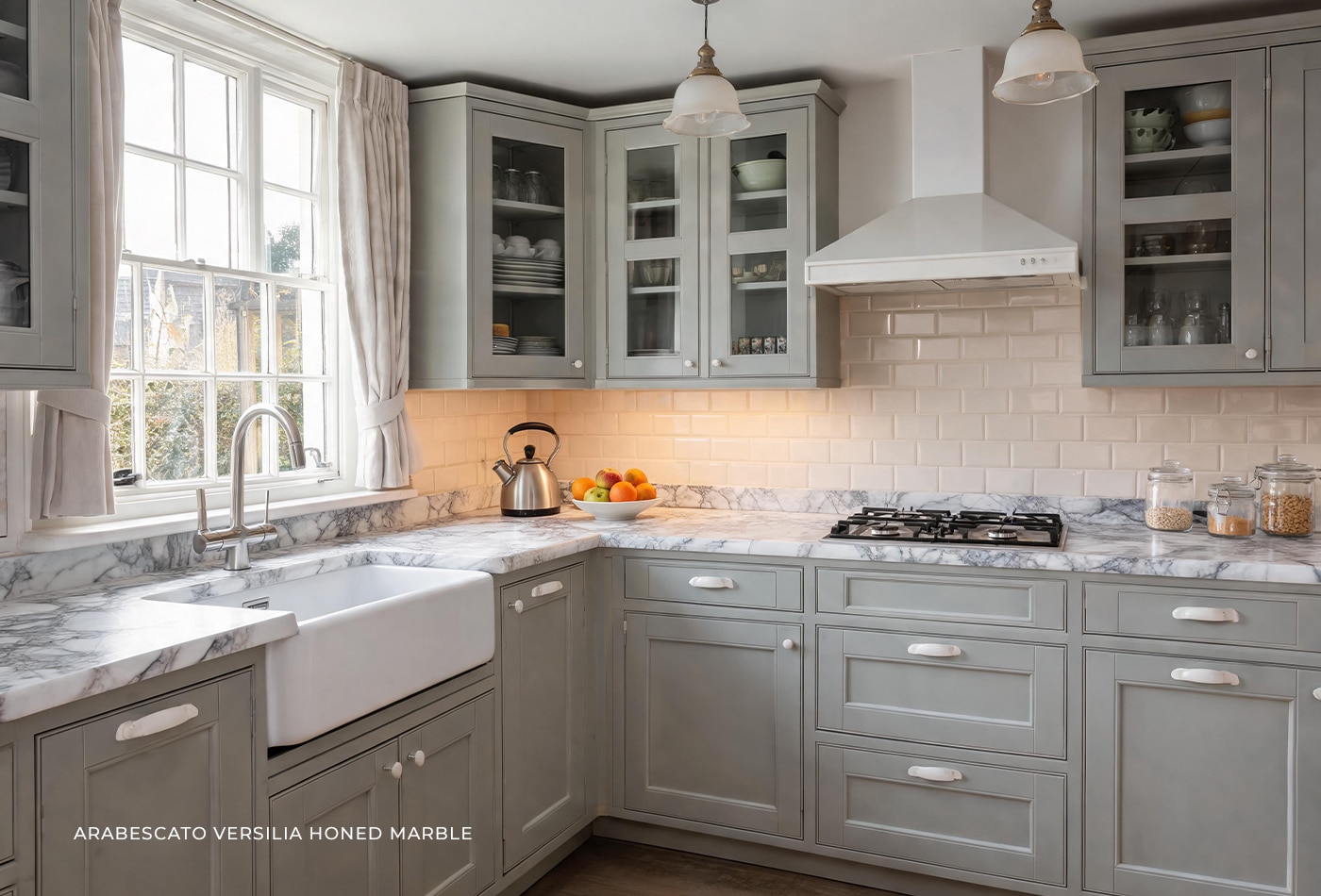 The market is characterised by natural stones such as granite, marble, slate, quartzite, travertine, sandstone, limestone, onyx, and sensa. Growth in the natural stone market is driven by increasing demand for durable and visually appealing materials in interior design applications such as kitchens, bathrooms, flooring, facades, worktops, and outdoor spaces. The UK granite market and the UK marble market continue to benefit from demand for premium and durable surfaces.
UK Natural Stone Market Faces Import Decline Despite Strong European Position
The UK’s natural stone market is shown as the smallest contributor in the global market, but it stands as a significantly established market within Europe. However, natural stone imports decreased significantly by 7.43% during 2023-2024. Especially between 2020 and 2024, the import rate was reduced at a 2.41% (CAGR) per year.
UK Natural Stone Market Trends and Growth Drivers – 2026
In the UK natural stone market, the trend towards more luxurious and premium surface materials, especially in kitchens and bathrooms, is also boosting sales, with granite, marble, quartzite, and other natural stone product types being used more frequently as work surfaces, splashbacks, islands, and vanity surfaces. Limestone and sandstone products continue to be widely used in paving and patios, walls and landscape projects, and slate is used for roofs, floors, and features.
In the United Kingdom’s construction stone market, there’s an increased interest in and usage of eco-friendly and sustainable stone products. Consumers are increasingly favouring local sourcing of stone materials to promote domestic industries and to decrease transportation-related CO₂ emissions.
UK Natural Stone Demand: Key Market Influences
Marble remains a popular choice for bathrooms, while textured and natural stone finishes are gaining popularity in kitchens, bathrooms, fireplaces, and other living spaces. Homeowners planning renovation or refurbishment projects can post a project on MyProject.ai to find a suitable tradesperson for their needs.
UK Natural Stone Market: Path to Growth in 2026
The natural stone market in the UK is forecast to experience modest growth with a cautious positive outlook in 2026, mainly driven by renovation, refurbishment, repair, maintenance activities, high-end residential interior design, the commercial sector, landscaping and heritage restoration.
But the market is threatened by economic uncertainty, rising construction costs, and competition from other materials. The UK construction output was reported to be up 0.3% in Q2 2026, while Experian projects that total construction output will grow 2.4% in 2026; according to the Construction Products Association, the industry is expected to decline by 2.5%.
At the same time, UK natural stone imports were down 7.43% between 2023 and 2024, illustrating the importance of international trade and supply-chain conditions. In 2026, renovation, development, high-end interiors, landscaping, and heritage restoration are expected to present growth opportunities for the UK natural stone market, although growth is expected to remain gradual.
Sources referenced: Grand View Research, 6Wresearch, Stone Federation Great Britain, Futurebuild 2026, Office for National Statistics (ONS), UK Government/GOV.UK and Experian.
FAQ Section
What is the UK natural stone market?
The UK natural stone market covers the supply, import, processing, distribution and use of natural stones such as granite, marble, limestone, sandstone and slate for construction, renovation, landscaping, interiors and heritage projects.
Is the UK natural stone market growing in 2026?
The UK natural stone market has a cautiously positive outlook in 2026. Demand is supported by renovation, premium interiors, landscaping, commercial projects and heritage restoration, although construction uncertainty, costs and competition from alternative materials remain challenges.
How big is the global natural stone market in 2026?
Grand View Research estimates the global natural stone market at $11.2 billion in 2026, up from $10.6 billion in 2025, with the market projected to reach $16.9 billion by 2033 at a 6.1% CAGR. These figures refer to the global market, not specifically the UK.
What is driving natural stone demand in the UK?
Key demand drivers include home renovation, luxury kitchens and bathrooms, natural stone worktops, landscaping, commercial interiors, durable building materials, sustainability considerations and heritage restoration.
What are the most popular natural stones in the UK?
Granite, marble, limestone, sandstone and slate are among the most important natural stone types used in the UK. Quartzite and travertine are also used in premium residential and interior applications.
Is granite popular in the UK?
Yes. Granite is widely used for kitchen worktops, flooring, commercial interiors and other applications where durability and resistance to wear are important. Globally, granite was the largest natural-stone product segment in Grand View Research’s 2025 analysis.
Is marble popular in the UK?
Yes. Marble remains particularly popular in premium bathrooms, kitchens, flooring, fireplaces, vanity surfaces and luxury interior-design projects because of its distinctive appearance and association with high-end design.
What is natural stone used for in the UK?
Natural stone is used for kitchens, worktops, bathrooms, flooring, paving, patios, walls, roofing, facades, fireplaces, landscaping, commercial interiors and heritage restoration.
Where does the UK import natural stone from?
The UK relies on international supply chains for many natural stone products. Important supplying countries and stone-producing markets include India, Italy, China and Spain, although the importance of individual countries varies by stone type and product.
Are UK natural stone imports declining?
Available market data indicates periods of declining UK natural stone imports, but the exact decline depends on the dataset, stone categories and measurement period used. Import performance is influenced by construction demand, renovation activity, shipping costs, exchange rates and international supply conditions.
Is natural stone sustainable?
Natural stone can have sustainability advantages because of its durability, long service life and potential for reuse, but its environmental impact varies according to quarrying, processing, transportation, installation and end-of-life practices.
What is the outlook for the UK natural stone market in 2026?
The outlook is cautiously positive rather than strongly expansionary. Renovation, premium interiors, landscaping, commercial projects and heritage restoration provide growth opportunities, while construction uncertainty, costs, imports and competition from alternative materials could limit overall growth.
How is UK construction affecting natural stone demand?
Construction activity is an important influence on natural stone demand. ONS data shows Great Britain’s construction output increased 0.3% in Q2 2026, while industry forecasts for the full year vary significantly. This mixed environment makes renovation, maintenance, premium interiors and specialist projects particularly important demand areas.
Is natural stone better than porcelain?
There is no universal answer. Natural stone offers unique patterns, natural variation and long-term durability, while porcelain can offer consistent appearance, lower maintenance and different price and installation options. The best choice depends on the application, budget, maintenance requirements and design objectives.
Which natural stone is best for UK gardens?
Sandstone, limestone and slate are commonly considered for UK gardens, patios, paths and landscaping. The best choice depends on the intended use, surface finish, weather exposure, maintenance requirements and project budget.
Which natural stone is best for kitchen worktops?
Granite, quartzite and marble are commonly used for premium kitchen worktops. Granite is valued for durability, quartzite for hardness and natural appearance, and marble for its distinctive veining and luxury aesthetic.